Home | Discovery and Naming | Physical Characteristics | Future Approaches
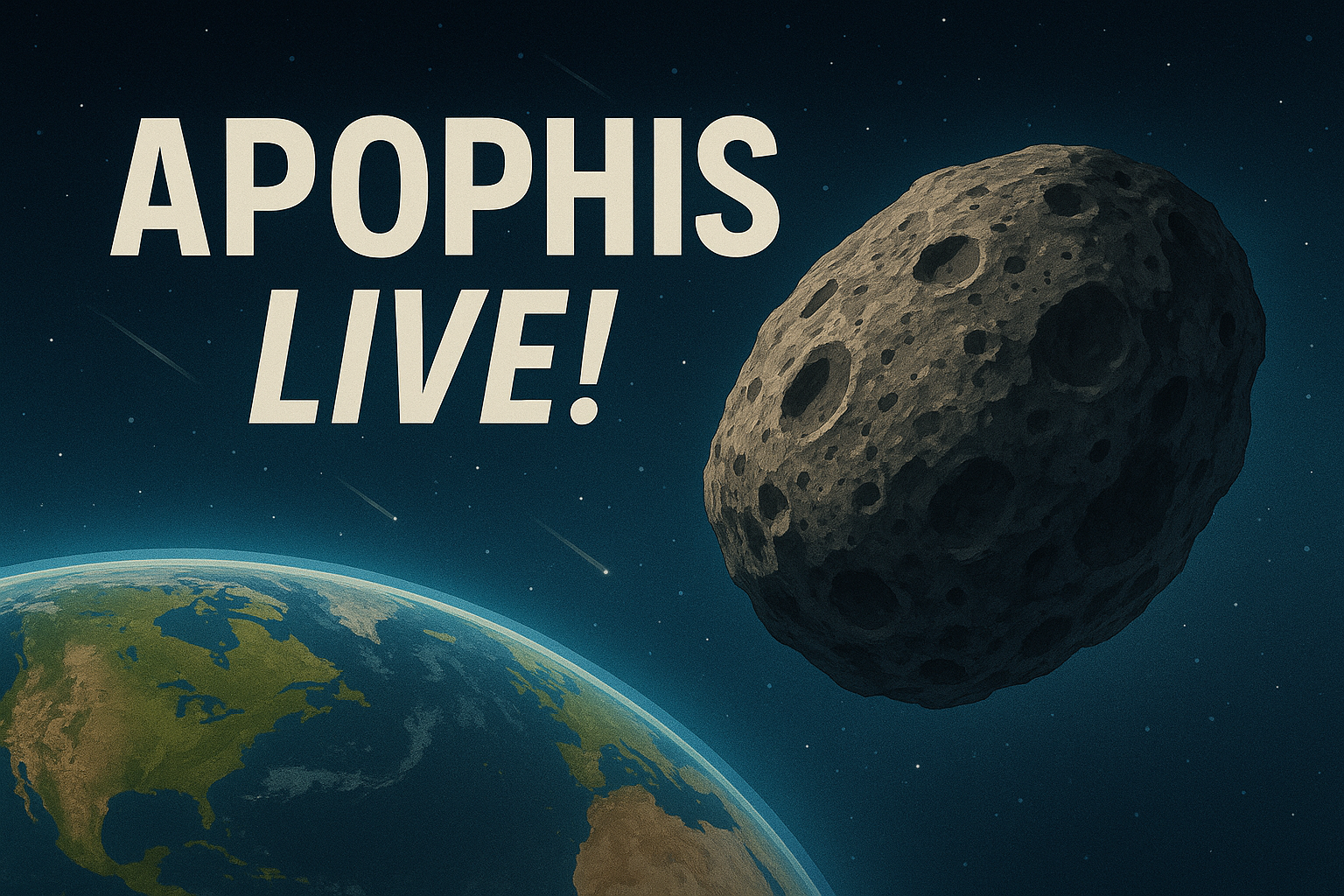
Asteroid 99942 Apophis is a substantial near-Earth object with dimensions that place it among the larger potentially hazardous asteroids closely monitored by astronomers. Based on comprehensive radar imaging campaigns conducted at the Goldstone Deep Space Communications Complex and the Arecibo Observatory between 2012 and 2013, scientists have determined that Apophis is an elongated object measuring approximately 450 meters in length by 170 meters in width. This irregular, elongated shape gives the asteroid a distinctly non-spherical profile, resembling more of an elongated potato or peanut than a round ball.
Initial estimates of Apophis's size were based on its observed brightness and assumptions about its surface reflectivity. When first discovered, astronomers estimated the diameter at approximately 450 meters based on the amount of sunlight the asteroid reflected. As more refined spectroscopic observations became available, particularly those conducted at NASA's Infrared Telescope Facility in Hawaii by astronomers Binzel, Rivkin, Bus, and Tokunaga in 2005, the estimated diameter was revised to approximately 350 meters. By 2013, NASA's impact risk assessments listed the diameter at 330 meters, reflecting continued refinement of the observations and models.
The most detailed information about Apophis's shape comes from radar imaging, a technique that uses powerful radio telescopes to bounce signals off asteroids and analyze the return echoes. These radar observations revealed that Apophis is not simply elongated but appears to be bilobed, meaning it consists of two distinct bulges or lobes connected by a narrower region. This bilobed structure suggests that Apophis may be a contact binary, an object formed when two previously separate asteroids came together at very low velocity and gently stuck together through gravitational attraction and possibly material cohesion.
Contact binaries are relatively common in the asteroid population, particularly among near-Earth asteroids. They form through various mechanisms, including the disruption of a larger parent body that created fragments that later reassembled, or through the gradual evolution of a rapidly rotating asteroid that split into two pieces which remained gravitationally bound. The bilobed structure of Apophis provides important clues about its formation history and the general processes that shape small bodies in the solar system.
Estimating the mass of an asteroid is considerably more challenging than measuring its size. While size can be determined through direct imaging or radar observations, mass requires either observing the asteroid's gravitational effect on other objects or making assumptions about the asteroid's bulk density based on its composition. For Apophis, the estimated mass is approximately 61 million kilograms, or 6.1 × 10^10 kilograms. This estimate is based on the observed volume of the asteroid combined with assumptions about its density derived from spectroscopic observations of its surface composition.
The uncertainty in this mass estimate is considerable, potentially varying by a factor of three in either direction. This means the true mass could be as low as approximately 20 million kilograms or as high as 180 million kilograms. This uncertainty arises primarily from unknowns about the asteroid's internal structure. Is it a solid, coherent object, or is it a loosely bound "rubble pile" of fragments with significant void spaces? Does it have a uniform composition throughout, or does it have a differentiated structure with varying densities at different depths?
The bulk density of Apophis is estimated at approximately 3.2 grams per cubic centimeter, a value consistent with stony asteroids composed primarily of silicate minerals. This density is higher than that of water (1.0 g/cm³) or ice (0.92 g/cm³) but lower than that of pure iron (7.9 g/cm³), indicating that Apophis is primarily rocky rather than metallic. The estimated density suggests a relatively coherent structure rather than a highly porous rubble pile, though some internal porosity is likely present.
Spectroscopic observations of Apophis provide crucial information about the composition of its surface materials. When sunlight strikes the asteroid's surface, different minerals absorb and reflect different wavelengths of light, creating a characteristic spectral signature that astronomers can analyze to infer composition. Apophis has been classified as an Sq-type asteroid based on its spectral characteristics.
The "S" in this classification indicates that Apophis belongs to the S-complex of asteroids, which are characterized by surfaces composed primarily of silicate minerals mixed with metallic iron-nickel. S-type asteroids are among the most common types in the inner solar system, particularly in the inner regions of the main asteroid belt and among near-Earth asteroids. The "q" qualifier indicates that Apophis's spectrum shows evidence of space weathering, a collection of processes that gradually alter the surface properties of airless bodies exposed to the space environment over millions of years.
Space weathering occurs through several mechanisms. Micrometeorite impacts continually bombard the asteroid's surface, breaking down surface materials into finer and finer particles. Solar wind particles, primarily protons and electrons streaming from the Sun, strike the surface and cause chemical changes to the minerals. Cosmic rays penetrate the surface layers and alter the crystal structure of minerals. Over time, these processes tend to darken the surface and reduce the strength of absorption features in the spectrum, making it more difficult to identify specific minerals.
The spectral properties of Apophis most closely match those of LL chondrites, a specific type of ordinary chondrite meteorite. Chondrites are primitive stony meteorites that have not been significantly altered by melting or differentiation since they formed in the early solar system. The "LL" designation indicates that these meteorites have low total iron content and low metallic iron content, distinguishing them from other ordinary chondrite groups designated H (high iron) and L (low iron). If Apophis is indeed similar in composition to LL chondrites, its surface is composed primarily of olivine and pyroxene minerals, along with smaller amounts of metallic iron-nickel and various minor minerals.
The albedo of an object is the fraction of incident sunlight that it reflects, with values ranging from 0 (perfectly absorbing, reflecting no light) to 1 (perfectly reflecting, absorbing no light). Radar imaging studies by Brozović and colleagues have estimated that Apophis has a relatively bright surface albedo of approximately 0.35, with an uncertainty of plus or minus 0.10. This means that Apophis reflects about 35 percent of the sunlight that strikes it, placing it among the brighter asteroids.
For comparison, the Moon has an average albedo of only about 0.12, making Apophis significantly more reflective than our natural satellite. This relatively high albedo is consistent with a surface that has experienced less space weathering than very ancient surfaces, or a surface where fresh material has been exposed relatively recently through processes such as impacts or tidal interactions. Other estimates have placed Apophis's albedo at approximately 0.23, still indicating a moderately bright surface.
The absolute magnitude of Apophis, a measure of its intrinsic brightness if it were located at a standard distance from both the Sun and Earth, is approximately 19.7, with an uncertainty of about 0.4 magnitudes. Absolute magnitude provides a size-independent measure of an asteroid's reflectivity, allowing astronomers to compare objects regardless of their current distance from Earth. An object with an absolute magnitude of 19.7 is far too faint to be seen with the naked eye under normal circumstances, requiring a telescope for detection. However, during close approaches to Earth, Apophis can brighten considerably due to its proximity, and during the 2029 encounter it will reach magnitude 3.1, making it visible without optical aid.
One of the most fascinating and complex aspects of Apophis is its rotation state. Unlike most asteroids, which rotate relatively simply around a single, roughly fixed axis (like a spinning top), Apophis is a tumbling rotator. This means that its rotation axis itself moves significantly over time in the reference frame of the asteroid, creating a complex, wobbling motion that makes the asteroid appear to flip and tumble through space.
Understanding Apophis's tumbling rotation requires distinguishing between several different periods and axes. The asteroid has a principal axis of highest moment of inertia, essentially the axis around which the object would most "naturally" want to spin if it were in its lowest energy rotation state. However, Apophis is not in this simple state. Instead, the angular momentum vector, which remains fixed in inertial space (absent external torques), points at an angle approximately 59 degrees south of the ecliptic plane, indicating that Apophis is a retrograde rotator, spinning in the opposite direction to most planets in the solar system.
The rotation axis precesses around this angular momentum vector with a time-averaged period of approximately 27.38 hours. Precession is a wobbling motion similar to what a spinning top exhibits as it slows down and the rotation axis traces out a cone. At the same time, the long axis of the elongated asteroid rotates with respect to the rotation axis. The combination of these motions creates the appearance that Apophis completes one "flip" on average every 30.56 hours, which is often cited as the asteroid's rotation period.
Adding further complexity, the angle between the principal axis of highest moment of inertia and the angular momentum vector varies periodically, swinging between approximately 12 degrees and 55 degrees. The angle between the long axis of the asteroid and the angular momentum vector varies between approximately 78 degrees and 102 degrees (90° ± 12°). These variations occur with a period of approximately 263 hours, sometimes referred to as the rotation period in the body-fixed frame.
During this 263-hour period, the principal axis of highest moment completes approximately 9.6 revolutions around the angular momentum vector (263 ÷ 27.38 ≈ 9.6), while the long axis completes approximately 8.6 revolutions (263 ÷ 30.56 ≈ 8.6). This creates a complex pattern where the asteroid's orientation repeats precisely only after the completion of full 263-hour cycles.
Earlier observations of Apophis, before the full complexity of its tumbling rotation was understood, reported rotation periods of approximately 30.4 hours, 30.55 hours, or 30.67 hours. These values all refer to essentially the same phenomenon: the time-averaged period of the harmonic with the strongest amplitude in the asteroid's light curve, which corresponds to twice the period between successive presentations of the same face of the elongated asteroid toward an observer.
The tumbling rotation state of Apophis raises intriguing questions about the asteroid's history. Asteroids generally evolve toward principal axis rotation (simple spinning around the axis of maximum moment of inertia) because this represents the lowest energy state for a given angular momentum. Tumbling rotation represents a higher energy state and requires some mechanism to maintain it against the natural tendency to damp out into principal axis rotation.
Several mechanisms can induce or maintain tumbling rotation. A significant impact that imparts angular momentum not aligned with the existing rotation can push an asteroid into a tumbling state. Close gravitational encounters with planets can also transfer energy into non-principal axis rotation modes. For rubble pile asteroids with significant internal friction, the damping timescale can be very long, potentially allowing tumbling states to persist for millions or billions of years.
In the case of Apophis, the upcoming close approach to Earth in 2029 may significantly affect its rotation state. Tidal forces from Earth's gravity will exert different forces on different parts of the asteroid as it passes through the strongest part of Earth's gravitational field. These tidal torques could alter the rotation period, change the orientation of the angular momentum vector, or potentially even shock the asteroid into a different rotation state entirely. Careful observations before, during, and after the 2029 encounter will provide unprecedented information about how tidal interactions affect asteroid rotation and potentially trigger surface changes or structural rearrangements.
The physical characteristics of Apophis, particularly its bilobed shape and tumbling rotation, provide important constraints on its internal structure and mechanical properties. The bilobed morphology strongly suggests that Apophis is not a monolithic solid object carved from a single piece of rock, but rather either a contact binary formed from two distinct objects or a heavily fractured body with significant internal discontinuities.
If Apophis is a contact binary, the two lobes may have substantially different densities, compositions, or structural properties. The connection between the lobes could be relatively weak, held together primarily by gravitational attraction and friction rather than material strength. Alternatively, if the bilobed shape results from a deep impact crater or an equatorial ridge, the internal structure might be more coherent but still heavily fractured.
The ability of Apophis to maintain a tumbling rotation state provides some information about its internal structure. If the asteroid were a highly cohesive, solid object with little internal friction, energy dissipation would tend to damp the tumbling motion relatively quickly on geological timescales. The persistence of tumbling suggests either that Apophis has substantial internal porosity and friction (consistent with a rubble pile structure) or that the tumbling state was induced relatively recently in the asteroid's history, perhaps by a past planetary encounter or significant impact.
The surface temperature of Apophis varies depending on its distance from the Sun and the angle at which sunlight strikes different parts of its surface. At its current orbit, with perihelion at 0.746 AU and aphelion at 1.099 AU, surface temperatures are estimated to average around 270 Kelvin (approximately -3 degrees Celsius or 27 degrees Fahrenheit). However, this average conceals significant variation. Surfaces facing directly toward the Sun during perihelion passage can reach temperatures well above 300 Kelvin, while shadowed regions and surfaces facing away from the Sun can be considerably cooler.
These thermal variations drive the Yarkovsky effect, a subtle but important force that affects asteroid orbits over long timescales. As an asteroid rotates, its surface heats up in sunlight and then cools as it rotates into shadow or night. The heated surface radiates infrared photons, carrying momentum. Because the afternoon side of the asteroid (which has been heated by the Sun) is warmer than the morning side (which is still cooling from the previous rotation), more momentum is radiated from the afternoon side. This creates a small but persistent thrust that, over thousands or millions of orbits, can significantly alter an asteroid's trajectory.
The close approach to Earth on April 13, 2029, will subject Apophis to tidal forces unprecedented in its recent history. While the asteroid will not approach within Earth's Roche limit, the distance at which tidal forces would overcome the asteroid's self-gravity and tear it apart, the tidal stresses will still be substantial. These forces may trigger several observable changes to the asteroid's physical properties.
First, the tidal encounter may alter Apophis's rotation state. The differential gravitational force between the near and far sides of the asteroid will exert torques that could change the rotation period, modify the precession rate, or even shock the asteroid into a different rotation mode. Detailed predictions are difficult because they depend sensitively on the internal structure and mechanical properties of the asteroid, which remain poorly constrained.
Second, tidal forces may trigger surface changes. If Apophis has loose regolith (fragmented rock and dust) on its surface, tidal shaking could cause this material to slide, settle, or redistribute. Weak regions or fractures in the asteroid could propagate or widen. In the most dramatic scenario, portions of the surface could experience landslides or avalanches, exposing fresh material from beneath the weathered surface layer.
This potential exposure of fresh material is particularly exciting from a scientific perspective. Space weathering gradually darkens and reddens asteroid surfaces over millions of years. If tidal effects expose fresh, unweathered material, Apophis's spectral class could shift from the weathered Sq-type to an unweathered Q-type, characterized by stronger absorption features and a brighter, less reddened spectrum. Observing such a change would provide direct evidence of active surface modification and would help calibrate models of how space weathering affects asteroid spectra over time.
Third, the tidal encounter may provide information about Apophis's internal structure through subtle effects on its orbit and rotation. Careful tracking of exactly how the asteroid responds to tidal forces can constrain models of its internal density distribution, porosity, and mechanical strength. These observations will be valuable not only for understanding Apophis specifically but also for improving general models of small body structure and evolution.
Apophis's physical characteristics place it in an interesting position within the population of well-studied near-Earth asteroids. Its size, approximately 370 meters in mean radius, makes it larger than the majority of known near-Earth asteroids but far smaller than the largest. For comparison, the near-Earth asteroid Eros, visited by the NEAR Shoemaker spacecraft, measures about 17 kilometers in its longest dimension. The asteroid Bennu, target of the OSIRIS-REx sample return mission, has a mean diameter of approximately 490 meters, making it somewhat comparable to Apophis in size though rounder in shape.
The bilobed structure of Apophis is shared with numerous other small asteroids and comet nuclei. The famous comet 67P/Churyumov-Gerasimenko, studied in detail by the Rosetta spacecraft, displays a pronounced bilobed shape. The asteroid Itokawa, visited by the Hayabusa spacecraft, also shows an elongated, bilobed morphology. These similarities suggest that contact binary formation or similar structural configurations are common outcomes of small body evolution in the solar system.
The tumbling rotation of Apophis is less common than principal axis rotation but far from unique. Several other asteroids, including some studied by spacecraft missions, exhibit tumbling or complex rotation states. Understanding the prevalence and evolution of tumbling rotation is an active area of research in asteroid science, with implications for how asteroids respond to collisions, planetary encounters, and their own internal evolution.
Despite the extensive observations of Apophis conducted over the past two decades, many questions about its physical properties remain unanswered. The 2029 close approach will provide an unprecedented opportunity to address these questions through detailed observations from Earth-based telescopes, radar facilities, and potentially spacecraft missions.
High-resolution optical and radar imaging during the 2029 approach will map surface features with unprecedented detail, potentially revealing craters, boulders, fractures, and regolith patterns. Spectroscopic observations covering a wide range of wavelengths will characterize surface composition and search for any heterogeneity in mineralogy across different regions. Detailed tracking of the asteroid's rotation state immediately before and after closest approach will quantify tidal effects and constrain internal structure.
These observations will transform our understanding of Apophis from a relatively distant object studied primarily through telescopes to a well-characterized world whose properties are known in detail. This knowledge will enhance our ability to predict its future orbit, assess any long-term impact risk, and understand the broader population of potentially hazardous asteroids of which Apophis is a prominent member. The physical characteristics and complex rotation of Apophis make it one of the most scientifically valuable asteroids accessible to study, and the coming years will undoubtedly reveal new insights into this fascinating object.